
From research to an immune response.
Conventional vaccine development is a multi-step process involving laboratory research, animal testing and human clinical trials. The material provided describes a typical development period of 10 to 15 years.
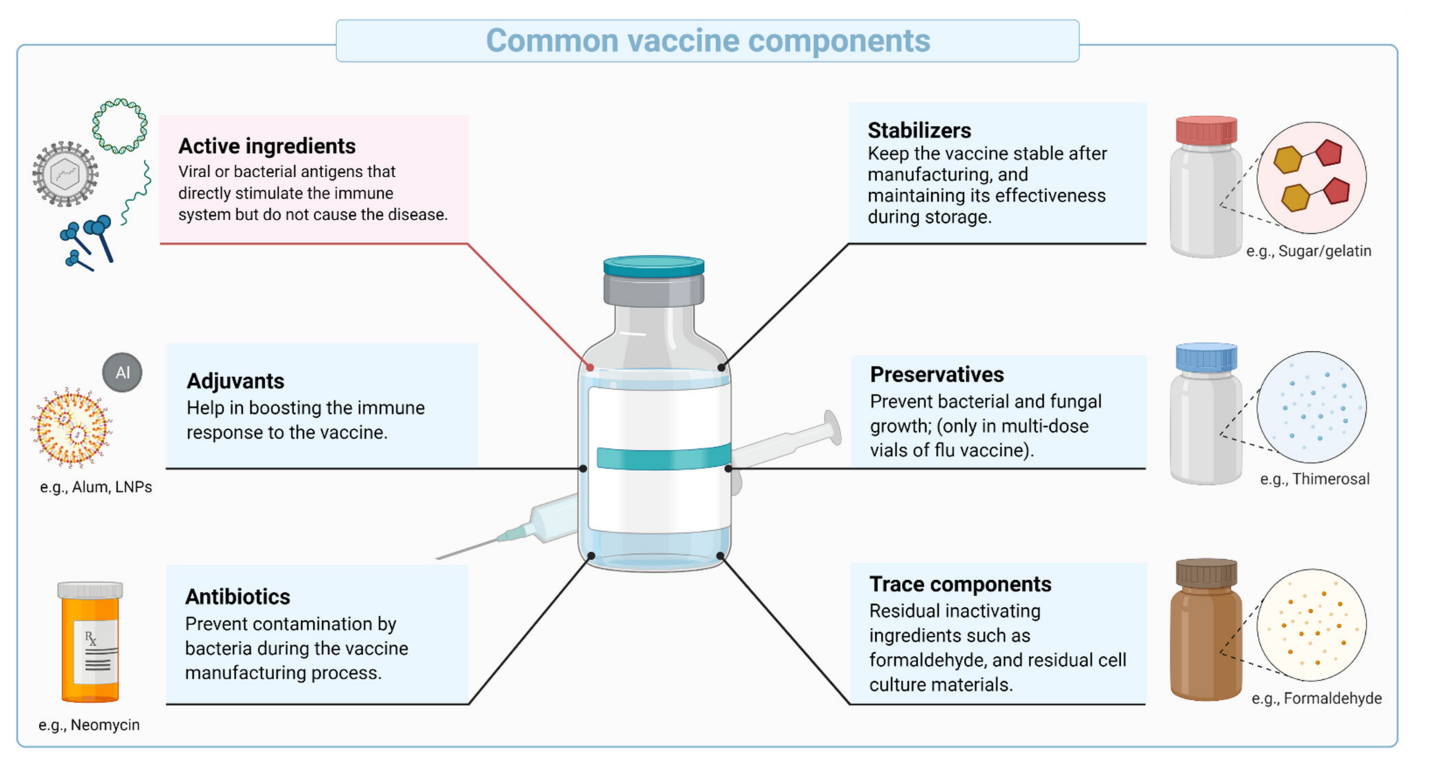
Common components, different functions.
The source diagram presents active ingredients together with supporting components used to maintain stability, safety and effectiveness.
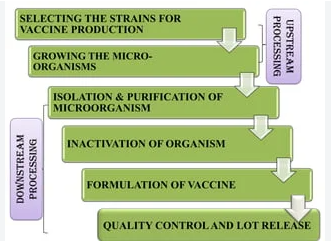
A controlled sequence from strain selection to lot release.
Using genetic code as the instruction layer.
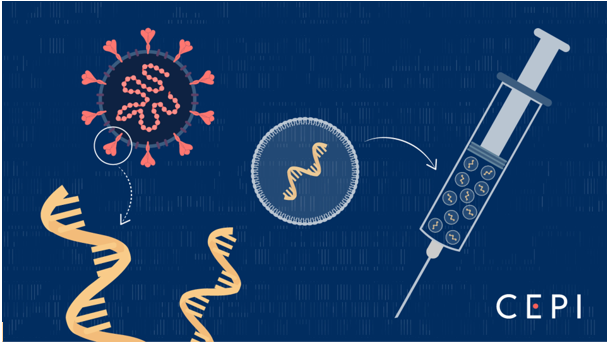
mRNA vaccine technology uses synthetic genetic code to instruct cells to build a harmless protein fragment that triggers an immune response.
This shifts the focus from delivering the pathogen itself toward delivering information that helps the immune system recognize a target.
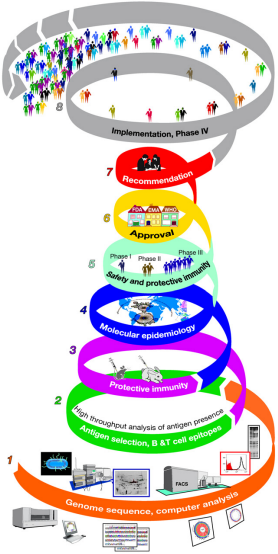
Start with the genome, then narrow toward a candidate.
The supplied schematic summarizes a pathway beginning with genome sequence and computer analysis, moving through antigen screening and protective-immunity assessment, then molecular epidemiology, trials and production, approval, recommendation and implementation.
See the genomics connection →